Targeting the Immune System
Major advancements have been made in cancer treatment in recent years.1 One treatment success is immunotherapy, which uses a person’s own immune system to combat cancer.2 Compared with standard treatments, like chemotherapy and radiation therapy, immunotherapy has been shown to be accompanied by fewer short- and long-term side effects, allowing for continuation of long-term treatment while maintaining quality of life.3 Immunotherapy is not effective for all cancer types, although certain factors, such as how advanced the cancer is and the presence of specific indicators (called biomarkers) can help determine if immunotherapy could be considered.3
Immune Checkpoint Inhibitors
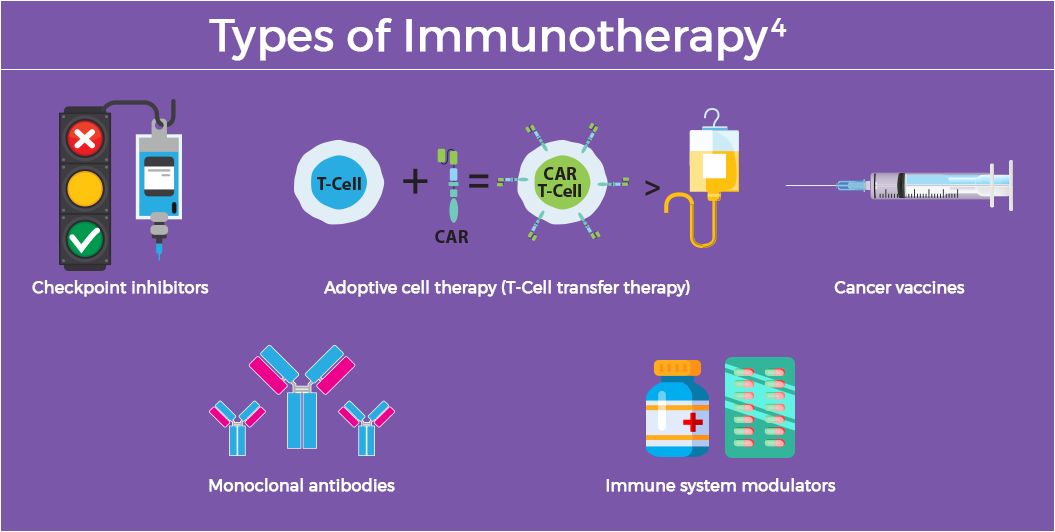
Immune checkpoint inhibitors are one type of immunotherapy. These agents block signals between cancer cells and immune cells that interfere with the immune system’s ability to identify cancer cells as harmful.3
Monoclonal Antibodies
CAR T-cell Therapy
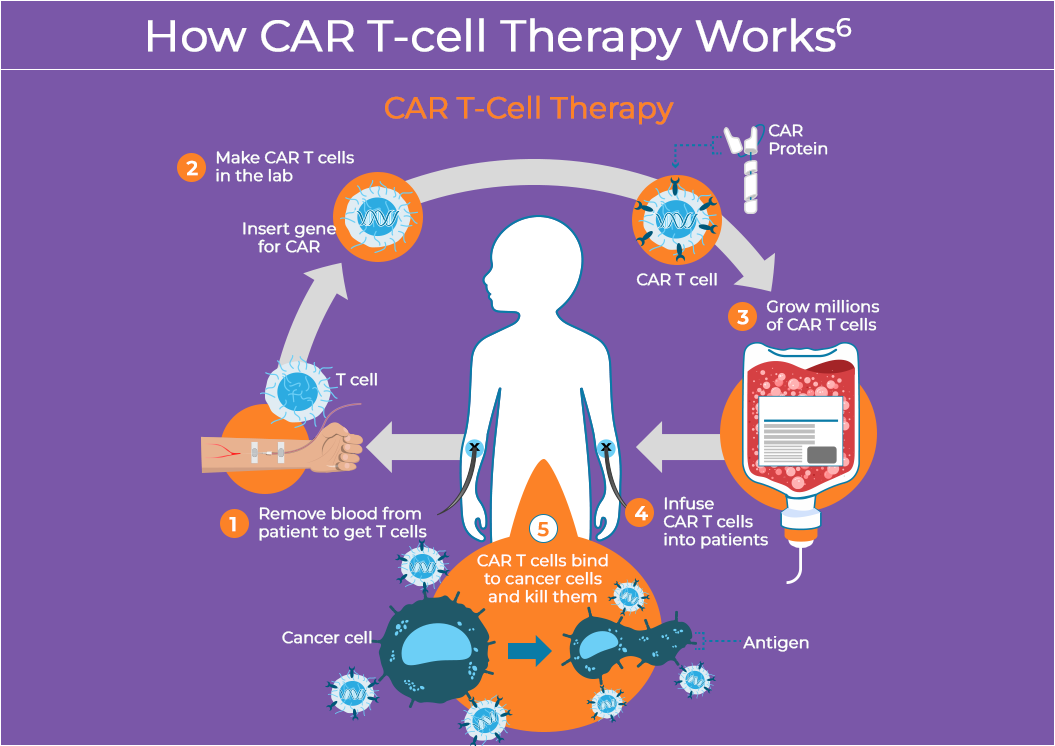
Another type of immunotherapy is chimeric antigen receptor (CAR) T-cell therapy.3 This therapy re-engineers an individual’s T-cells to improve their ability to recognize and combat cancer cells. The re-engineered cells are then injected back into the person’s body.3 CAR T-cell therapies treat blood cancers, such as lymphomas, certain leukemias and multiple myeloma, in both children and adults.3
New Tumor Targets
References
- American Cancer Society. Cancer Research Insights from the Latest Decade, 2010 to 2020. December 30, 2019. https://www.cancer.org/latest-news/cancer-research-insights-from-the-latest-decade-2010-to-2020.html
- American Cancer Society. Immunotherapy. https://www.cancer.org/treatment/treatments-and-side-effects/treatment-types/immunotherapy.html
- City of Hope. Immunotherapy. Updated July 20, 2022. https://www.cancercenter.com/treatment-options/precision-medicine/immunotherapy
- Cleveland Clinic. Immunotherapy. Last reviewed November 15, 2022. https://my.clevelandclinic.org/health/treatments/11582-immunotherapy
- National Cancer Institute. Monoclonal antibodies. September 24, 2019. https://www.cancer.gov/about-cancer/treatment/types/immunotherapy/monoclonal-antibodies
- National Cancer Institute. CAR T Cells: Engineering Patients’ Immune Cells to Treat Their Cancers. Updated: February 26, 2025. https://www.cancer.gov/about-cancer/treatment/research/car-t-cells
- Granier C, De Guillebon E, Blanc C, et al. Mechanisms of action and rationale for the use of checkpoint inhibitors in cancer. ESMO Open. 2017;2(2):e000213.
- The University of Texas MD Anderson Cancer Center. LAG-3 inhibitors: A new type of immunotherapy. November 30, 2022. https://www.mdanderson.org/cancerwise/lag-3-inhibitors–a-new-type-of-immunotherapy.h00-159544479.html
- Aithal A, Rauth S, Kshirsagar P, et al. MUC16 as a novel target for cancer therapy. Expert Opin Ther Targets. 2018;22:675-686.
- Karapetyan L, Luke JJ, Devar D. Toll-like receptor 9 agonists in Cancer. Onco Targets Ther. 2020;13:10039-10060.
- CD20/CD3 Bispecific Antibodies Can Revolutionize B-Cell Lymphoma Therapy. Target Ther Oncol. 2022;11:95,101-102.
- Kleber M, Ntanasis-Stathopoulos I, Terpos E. BCMA in Multiple Myeloma-A Promising Key to Therapy. JÂ Clin Med. 2021;10:4088.
- VISTA Emerges as a Promising Immunotherapy Target in Cancer. Target Ther Oncol. 2022;11:81,87-88.
ALL URLs accessed April 6, 2026